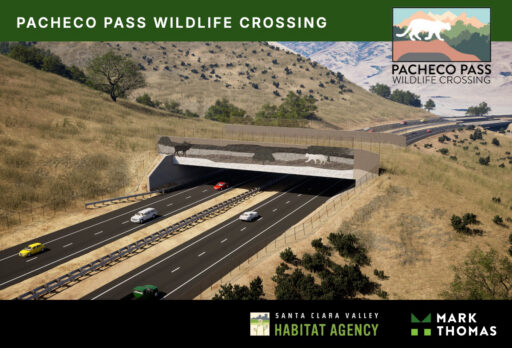

Restoring a Critical Wildlife Corridor at Pacheco Pass
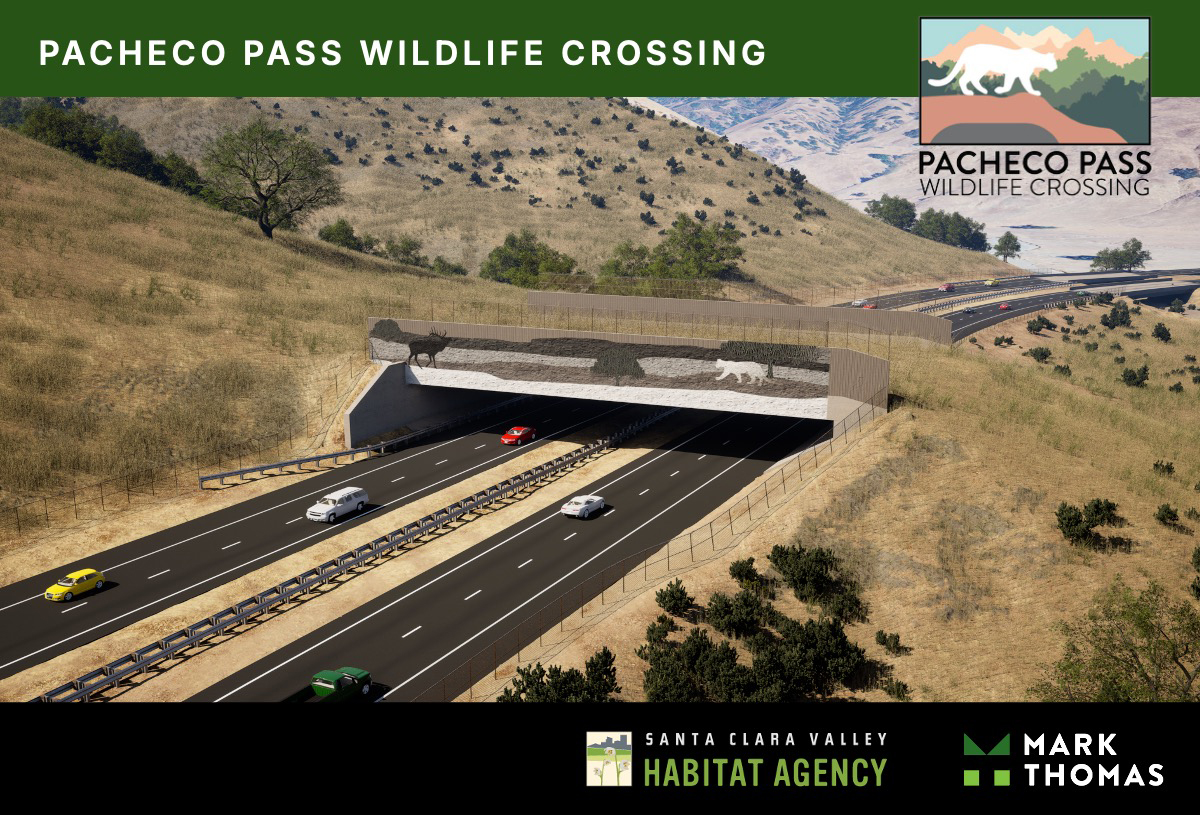
The Pacheco Pass Wildlife Crossing will reconnect habitats divided by SR-152, supporting wildlife movement, genetic diversity, and ecosystem resilience while creating a safer roadway for people and animals.
SR‑152 at Pacheco Pass is more than a vital transportation corridor; it’s also a critical wildlife corridor.
Today, that connection is interrupted, with the highway acting as a barrier to species that rely on safe north‑south movement, including mountain lions, tule elk, deer, and bobcats. That’s where the Pacheco Pass Wildlife Crossing comes in. A wildlife crossing is a specially designed bridge or underpass that allows animals to safely cross busy roadways. At SR-152/Pacheco Pass, the crossing will be designed to look and function like the surrounding landscape, with natural soils, vegetation, and protective features that guide wildlife across while shielding them from traffic below.
By reconnecting habitats on both sides of SR‑152, the project will help restore one of California’s key ecological linkages, supporting genetic diversity, improving wildlife movement, and help species adapt to a changing climate. It will also enhance roadway safety by reducing wildlife‑vehicle collisions, benefiting both people and animals.
We’re proud to support the @Santa Clara Valley Habitat Agency and project partners by providing planning and design services for this landmark project. Our team has helped identify optimal crossing locations, advance environmental clearance, and develop design concepts that integrate engineering with ecological science, ensuring the structure not only functions safely but truly works for wildlife.
This project reflects what’s possible when infrastructure and environmental stewardship come together, creating connections that matter for both communities and the natural world.