

Beyond the Crossing: How Wildlife Fencing Makes Pacheco Pass Safer for Animals and Drivers
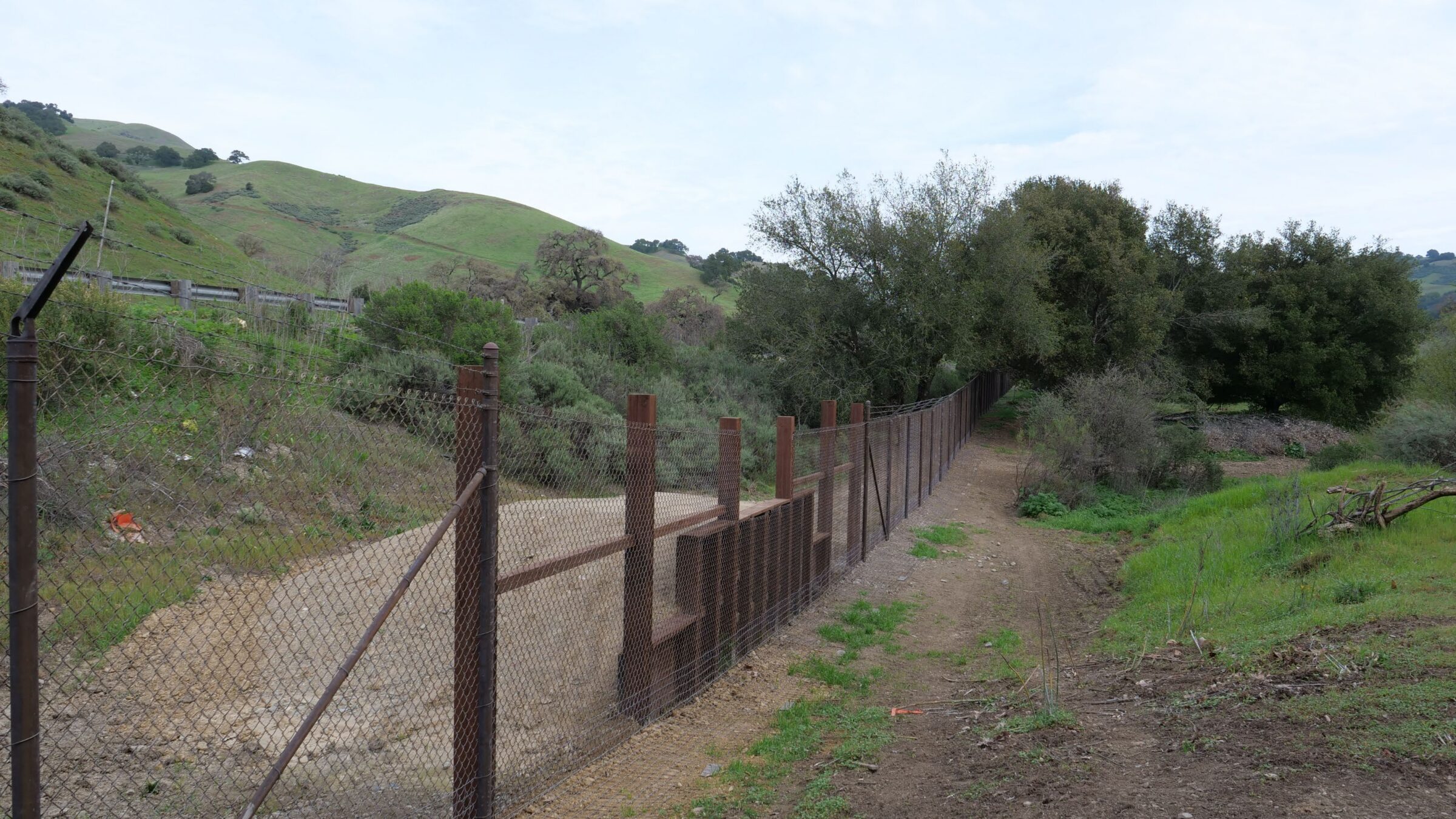
Wildlife crossings rely on more than bridges alone. At Pacheco Pass, strategically designed fencing guides animals to safe crossings, reduces wildlife-vehicle collisions, and helps reconnect habitats along SR-152.
While wildlife crossings often take the spotlight, the success of these structures depends just as much on what happens on the approaches to the crossings.
For the Pacheco Pass Wildlife Crossing along SR‑152, fencing plays a critical role in making the entire system work. The project uses continuous, directional fencing to guide wildlife toward safe crossing locations while preventing access to the roadway. Jumpouts were included in the fencing design to allow trapped wildlife to safely exist the restricted road zone.
Our team supported the planning and design of this fencing system as an integrated part of the overall project, including coordinating fence alignments with crossing locations, tying into existing and adjacent structures, and ensuring continuity along the corridor to maintain effectiveness across varied terrain. The fencing is designed not just as a barrier, but as a tool for behavior, helping to keep animals off SR-152 and directing them towards existing and future safe crossings, where they can move unharmed between habitats.
By pairing crossing structures with strategically designed fencing, the project creates a complete system that improves wildlife connectivity while reducing the risk of wildlife‑vehicle collisions.